
Instructions
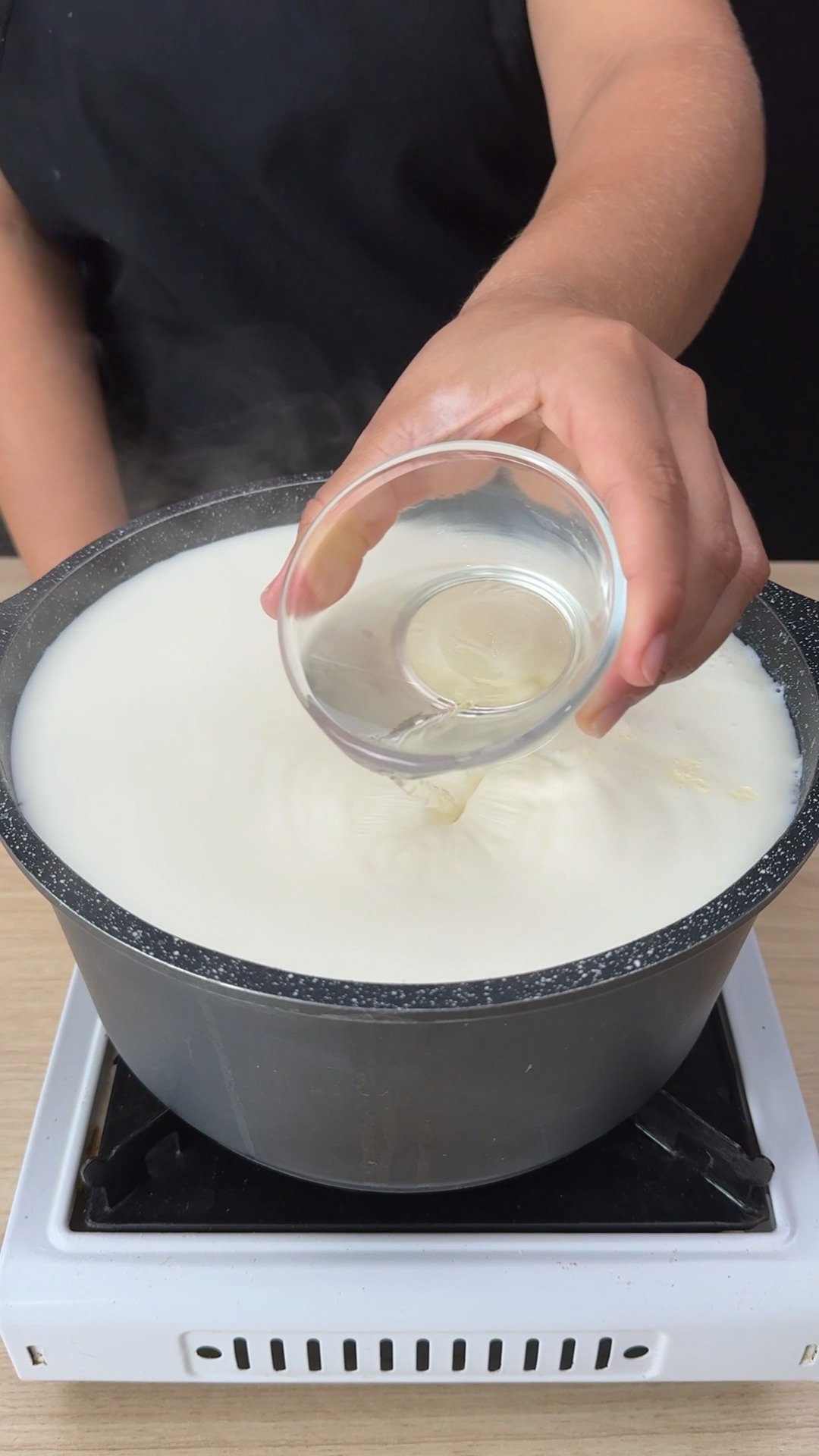
- Bring the milk to a boil in a large pot.
- Remove from heat once boiling.
- Add ½ cup of vinegar to the hot milk.
- Stir vigorously with a spatula until the milk curdles completely.
- Place a strainer over a bowl and pour the curdled milk into the strainer to separate the whey from the curd.
- Press the curd with a spatula to drain excess whey.
- Transfer the curd to a blender.
- Add the butter, salt, and a splash of milk to the blender.
- Blend until smooth and creamy.
- Pour the mixture into a bowl.
- Refrigerate for at least a few hours to firm up.
Keto & Low-Carb Variations
- Use full-fat milk.
- Substitute lemon juice for vinegar.
- Replace butter with cream cheese.
- Add herbs and spices for extra flavor.
Tips for Success
- Use fresh, high-quality ingredients.
- Ensure the milk is fully curdled before straining.
- Blend thoroughly for a smooth, creamy texture.
- Refrigerate for at least a few hours to firm.
- Get creative! Experiment with different herbs, spices, or fruits.
Conclusion
Making cream cheese from boiled milk and vinegar is surprisingly easy and yields a delicious, fresh result! Enjoy it on toast, as a spread, or in your favorite recipes. Give it a try!
FAQs
Can I use any type of vinegar?
Yes, white vinegar or apple cider vinegar both work well. The flavor may vary slightly.
How long does it last?
Stored properly in an airtight container in the refrigerator, it will last up to a week.
Can I freeze it?
Yes, but the texture might change after thawing. Best for cooking or baking.
Can I add flavorings?
Absolutely! Herbs, spices, and fruits are all great additions.
Can I use low-fat milk?
Yes, but full-fat milk will give you the creamiest results.
Is homemade cream cheese healthier?
Generally, yes! It avoids preservatives and additives found in store-bought versions.
ADVERTISEMENT
